Dispensing machines are critical to modern electronics assembly, semiconductor packaging, medical device production, and precision manufacturing. When a dispensing machine becomes unstable, produces inconsistent glue output, or fails to operate at expected precision, the entire production line can be impacted—leading to product defects, yield loss, and higher operational costs. To help manufacturers maintain long-term stability and achieve high-quality dispensing results, this article provides a complete guide to fault diagnosis, maintenance procedures, MTBF interpretation, calibration steps, and industry-specific application requirements. All content is written based on the manufacturing expertise of Shenzhen ZCX Technology Co., Ltd., a leading solutions provider for advanced glue dispensing equipment since 2011.
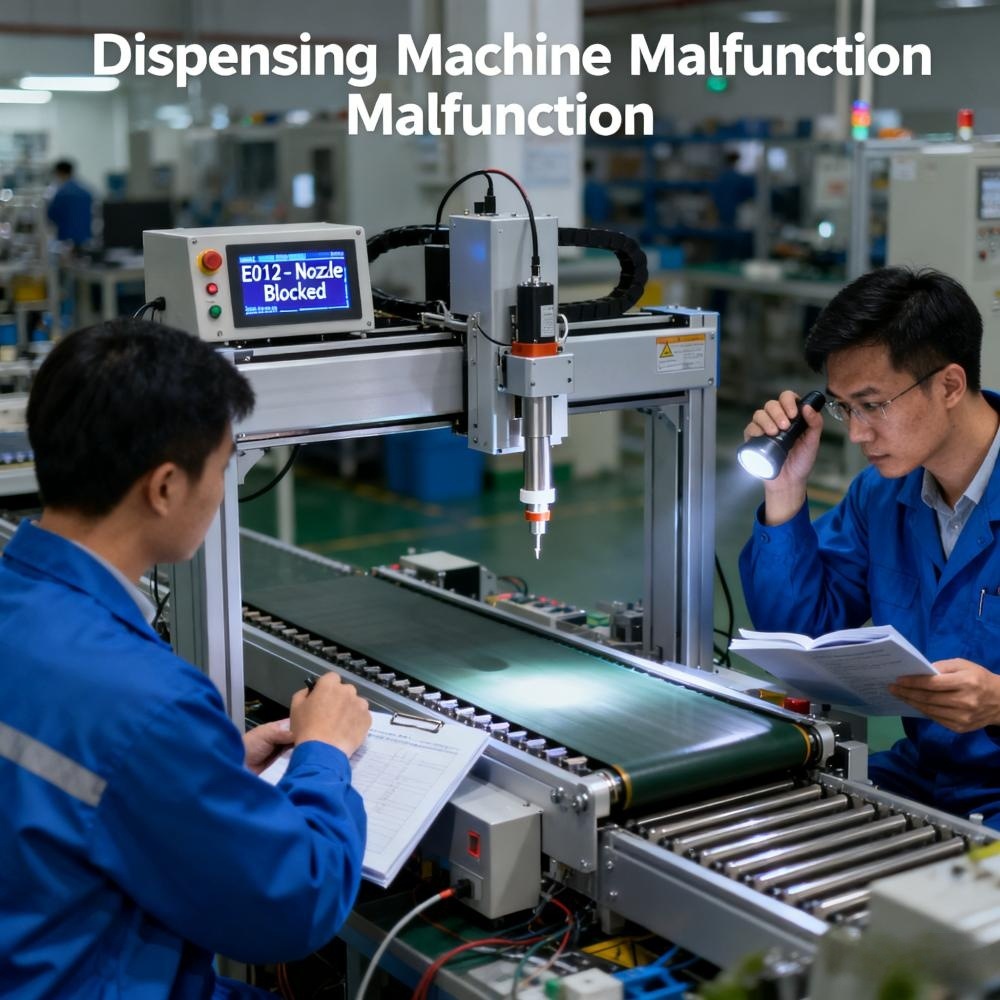
1. Common Dispensing Machine Failures & Troubleshooting Methods
1.1 Typical Operating Failures You May Encounter
Even high-precision dispensing machines can experience operational issues due to material variations, environmental factors, wear of internal components, or incorrect setup. Below are common problems:
- Inconsistent glue output (too little, too much, pulsation)
- Glue leakage around the valve
- Delayed startup or slow response of the dispensing valve
- Machine not dispensing at all
- Unstable line width or dot shape
- Pressure fluctuations in the glue feeding system
- Air bubbles inside the dispensing system
1.2 Reasons Why a Dispensing Machine May Stop Dispensing
When a machine suddenly stops dispensing, the root cause is typically among the following six scenarios:
- Glue viscosity too high: Material thickens due to temperature drop, long storage, or improper mixing.
- Blocked needle / nozzle: Cured residue obstructs the flow path.
- Insufficient pressure: Low air pressure, pump malfunction, or unstable pressure regulator.
- Air bubbles inside the fluid line: Leads to intermittent flow or complete blockage.
- Valve internal seal wear: Causes leakage, inconsistent or no output.
- Incorrect software parameters: Improper open/close time, stroke, or dispensing delay settings.
1.3 Immediate Troubleshooting Steps
When the dispensing machine does not produce glue, follow these proven troubleshooting steps:
- Check the pressure gauge and ensure stability within the recommended range.
- Verify nozzle cleanliness; replace and purge if clogged.
- Check material tank for sedimentation or curing.
- Perform “manual purge” mode to eliminate internal air bubbles.
- Inspect valve seals and O-rings for wear and replace if needed.
- Review dispensing parameters and restore default values if misconfigured.
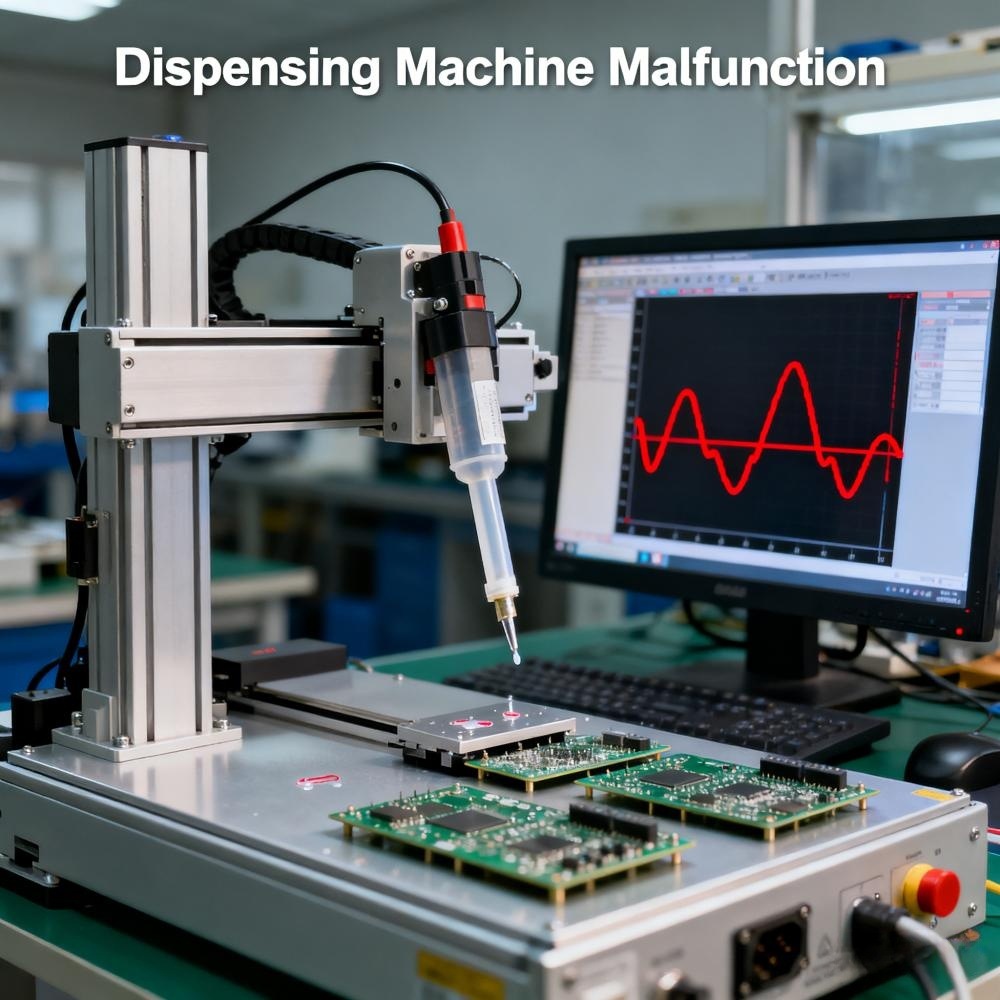
2. Understanding MTBF (Mean Time Between Failures) for Dispensing Systems
MTBF is a key reliability indicator that reflects how long a dispensing machine can operate before a failure is expected to occur. For production engineers and factory managers, MTBF helps in planning preventive maintenance, budgeting parts replacement, and forecasting downtime.
2.1 What MTBF Means for Your Production
A typical industrial dispensing machine from a high-quality manufacturer such as ZCX Technology often achieves:
MTBF: 3,000 – 10,000 hours depending on valve type, glue viscosity, ambient conditions, and operational load.
2.2 Factors Affecting MTBF
- Quality of mechanical structure and motion system
- Valve design and seal material durability
- Glue properties (abrasive fillers can reduce lifespan)
- Constant high-pressure or high-temperature operation
- Environmental dust and humidity
- Operator usage habits
3. Step-by-Step Guide: How to Calibrate a Dispensing Machine
Calibration ensures stable glue output, consistent dot size, and accuracy of dispensing paths. Below is a standard calibration workflow used in professional manufacturing facilities.
3.1 Calibration Procedure
- Check mechanical zero positions of X/Y/Z axes.
- Warm up the dispensing valve to stabilize temperature conditions.
- Perform dispensing valve stroke calibration using manufacturer-provided tools.
- Adjust pressure regulators to the recommended working range.
- Test multiple dots and measure consistency under microscope.
- Adjust timing parameters (open delay, close delay, dispensing time).
- Save calibration profile and back it up for future reference.
Regular calibration is necessary, especially when switching to new glue materials or changing production environments.
4. Pressure Control System Repair & Temperature Drift Solutions
4.1 Pressure System Repair
A malfunction in the pressure system leads to inconsistent flow, bubble formation, or total stoppage. Key areas to inspect:
- Air pressure regulator stability
- Leakage in air tubes or connectors
- Degraded diaphragm pumps
- Pressure tank sealing ring condition
During repair, confirm whether the fluctuation originates from the air source itself or from the pressure tank, and replace components accordingly.
4.2 Solving Temperature Drift
Temperature drift is a common issue in precision dispensing. Glue viscosity changes significantly with temperature, affecting flow rate and final dot size.
Effective countermeasures include:
- Using a heated dispensing valve for high-viscosity adhesives
- Maintaining constant workshop temperature (±1°C)
- Enabling automatic viscosity compensation functions
- Pre-heating glue material before production
5. Wear Parts Replacement Cycle & Maintenance Cost Estimation
5.1 Wear Parts Replacement Cycle
Dispensing machines include several consumable parts. Recommended replacement intervals are:
- Nozzles: every 7–30 days depending on curing tendency.
- Valve seals and O-rings: every 3–6 months.
- Filter elements: every 1–3 months.
- Driving screws / sliders: every 12 months inspection.
5.2 Maintenance Budget Planning
A typical yearly maintenance budget includes:
- Spare nozzles and connectors
- Valve seal kits
- Periodic technician service visits
- Software upgrades if applicable
For factories operating 24/7, a more frequent preventive maintenance plan is recommended.
6. Industry Requirements & Application Standards
6.1 SMT Dispensing Machine Selection Requirements
In SMT applications, dispensing must support high-speed, fine-pitch components. Key requirements include:
- Dot size repeatability within ±0.02 mm
- Support for high-viscosity solder paste or epoxy
- Jet dispensing capability for ultra-fine pitch
- Anti-static machine frame design
6.2 PCB Board Dispensing Process Standards
- Uniform dot volume and controlled spreading
- Accurate positioning to avoid solder pad contamination
- Temperature control to avoid curing before placement
6.3 Automotive Electronics Protection Requirements
Automotive-grade components require extremely high reliability. Dispensing machines must support:
- IP54–IP65 protection level
- High-temperature resistant motion system
- Stable operation under vibration
6.4 High-Temperature Environment Dispensing Recommendations
For adhesives like silicone or epoxy requiring elevated temperatures:
- Equipped heater modules for tanks & valves
- Thermal-insulated dispensing lines
6.5 Underfill Dispensing for Semiconductor Packaging
Underfill is critical for flip-chip and COB processes. Machines must provide:
- Ultra-fine line width capability
- High flow stability for capillary underfill
- High-speed jet valves for micro-volume control
6.6 LED Encapsulation Dispensing Speed Requirements
LED production requires extremely fast dispensing:
- Cycle time as low as 0.1–0.2 seconds per dot
- Consistent light-bar encapsulation patterns
6.7 Medical Device Dispensing Precision Standards
Medical production requires:
- ±0.01 mm accuracy
- ISO-certified clean materials
- FDA compliant fluid path materials
6.8 Food-Grade Dispensing Machine Material Requirements
- Stainless steel 304/316 contact surfaces
- BPA-free, non-toxic pump materials
- Easy-to-clean modular design
Conclusion & Call to Action
From troubleshooting and MTBF analysis to calibration, wear-part replacement, and industry-specific application requirements, dispensing machinery is a highly technical field that directly affects product quality, yield, and factory efficiency. Equipped with more than a decade of experience, Shenzhen ZCX Technology Co., Ltd. continues to deliver high-performance dispensing solutions tailored to electronics, automotive, medical, semiconductor, LED manufacturing and more.
If you are experiencing dispensing failures, unstable glue output, precision issues, or planning to upgrade your production line, contact our engineering team today. We provide free technical consultation, sample testing, and customized dispensing solutions designed for your product and industry.
→ Get in touch with ZCX Technology now and let us help you optimize your dispensing performance.